
DESIGN ENGINEERING · OFF-ROAD VEHICLES
7 Proven Off-Road Vehicle Seat Design Strategies to Improve Performance and Reduce Development Costs
A practical engineering framework for durable, ergonomic, and cost-effective seating systems built for demanding off-road applications.
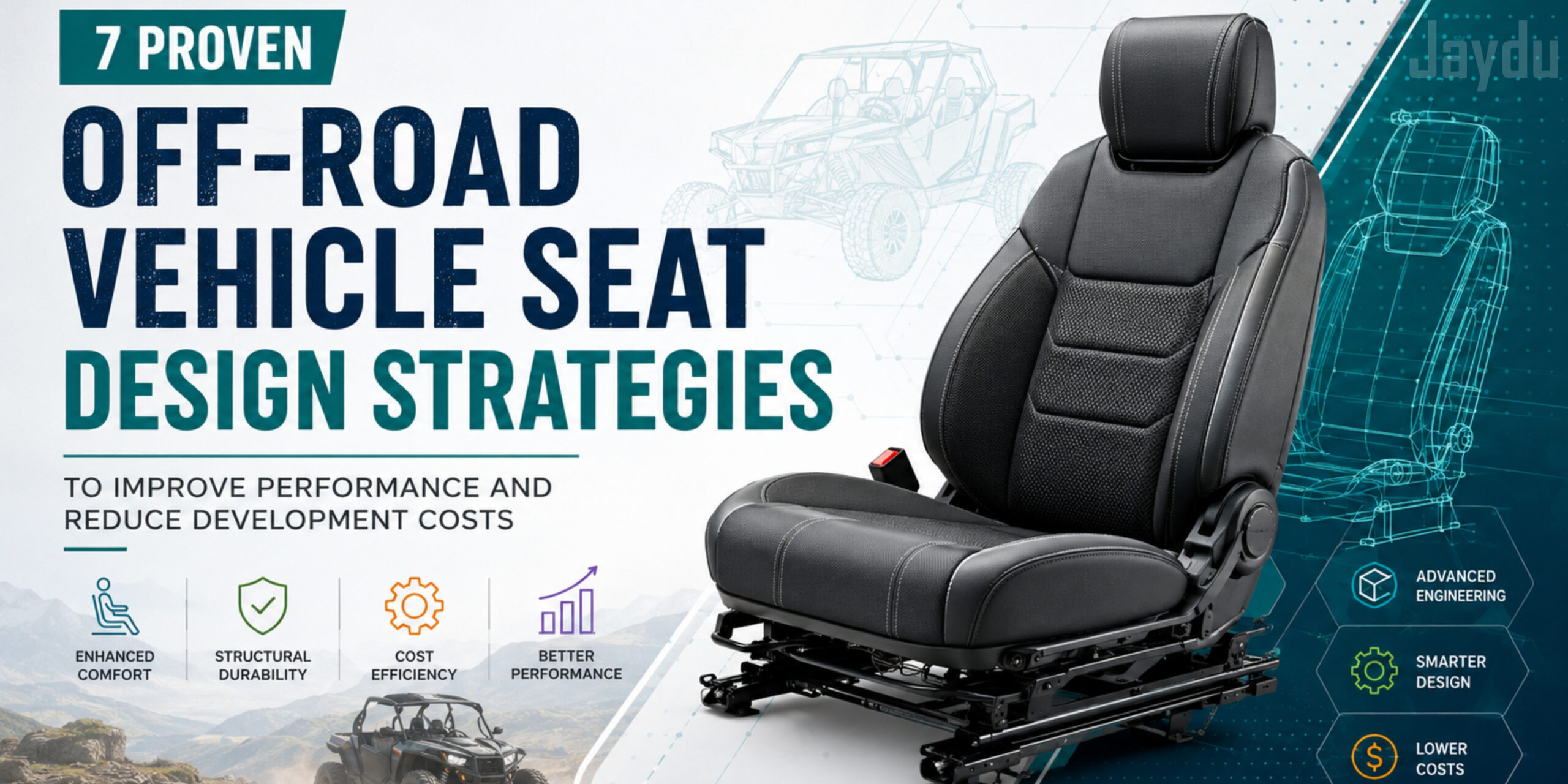
The demand for high-performance off-road vehicles across the United States continues to grow in industries such as agriculture, construction, utility, powersports, and defense. As OEMs introduce new vehicle platforms, Off-Road Vehicle Seat Design has become a critical engineering discipline that directly influences durability, operator comfort, manufacturing efficiency, and product success.
A well-engineered seating system is more than a comfort feature. It contributes to structural integrity, user safety, manufacturing optimization, and overall vehicle reliability. For manufacturers aiming to shorten development cycles while maintaining quality, investing in advanced Off-Road Vehicle Seat Design is a strategic advantage.
This article explores seven proven engineering strategies that help North American OEMs build durable, ergonomic, and cost-effective seating systems for demanding off-road applications.
PERFORMANCE CONTEXT
Why Off-Road Vehicle Seat Design Matters
Modern off-road vehicles operate in environments where continuous vibration, uneven terrain, mud, dust, moisture, and heavy loads are everyday conditions. These harsh operating environments require seating systems that provide long-term durability while maintaining operator comfort throughout extended working hours.
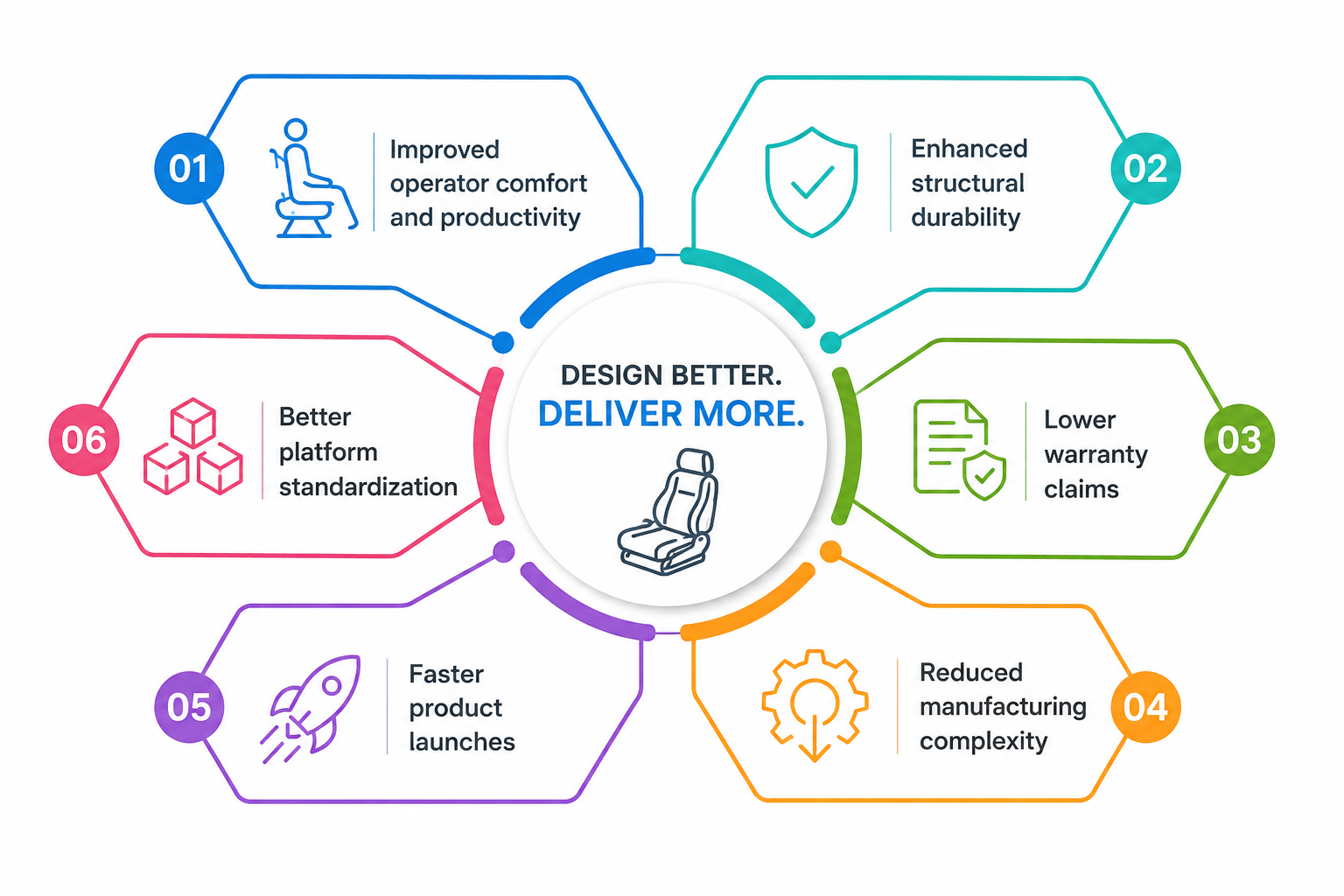
An optimized Off-Road Vehicle Seat Design helps manufacturers achieve several business objectives, including:
ENGINEERING REALITY
Common Off-Road Vehicle Seat Design Challenges
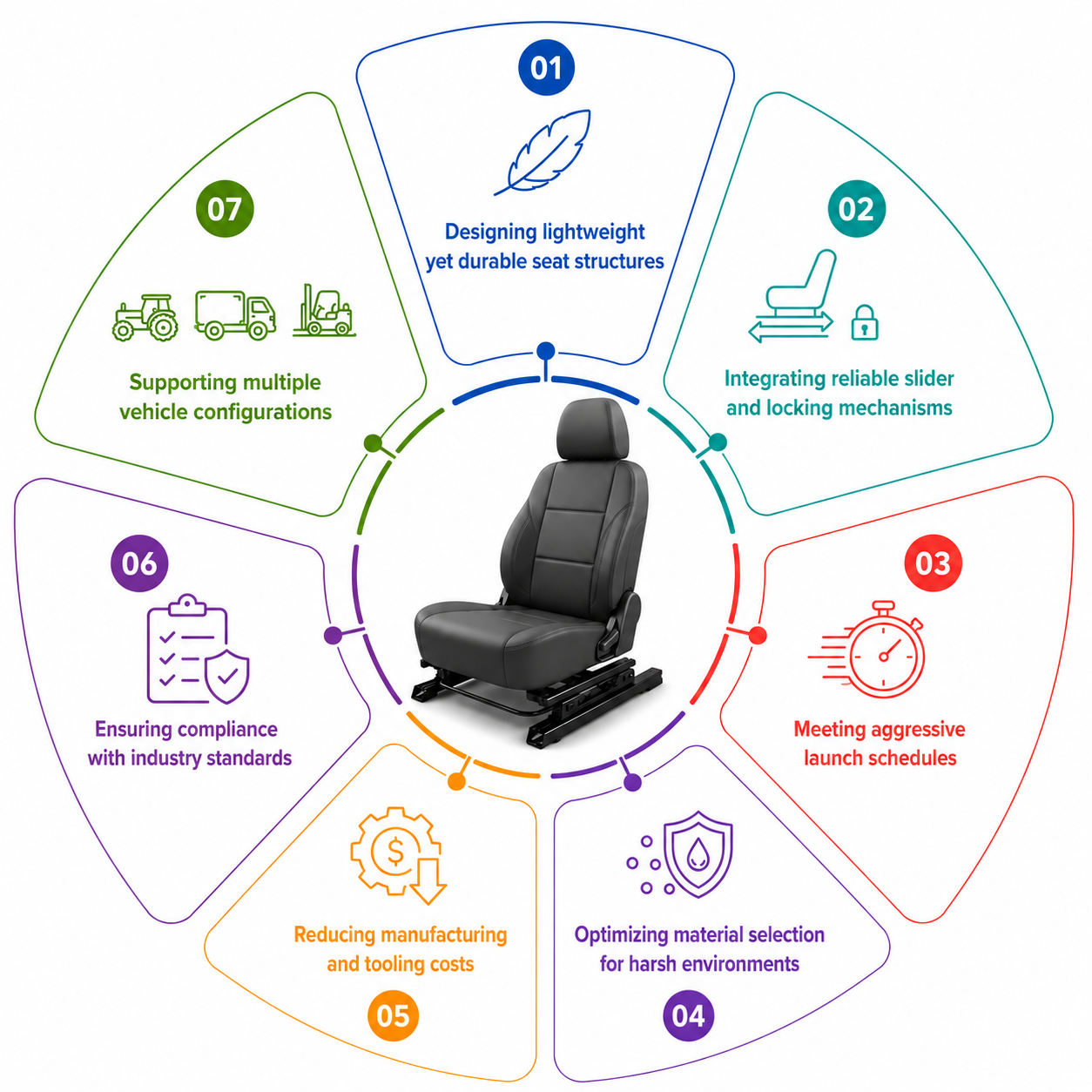
Developing a reliable seating system involves balancing multiple engineering priorities within tight project timelines.
Some of the most common Off-Road Vehicle Seat Design challenges include:
DESIGN PLAYBOOK
7 Proven Off-Road Vehicle Seat Design Strategies
Develop Multiple Design Concepts Early
Creating multiple concepts allows engineering teams to compare manufacturability, weight, cost, durability, and ergonomics before finalizing a production-ready solution. Evaluating alternatives early reduces design revisions and minimizes project risks.
Validate Structural Performance Using FEA
Finite Element Analysis (FEA) enables engineers to predict structural behavior before physical prototypes are built.
By validating stress distribution, deformation, and load capacity early in development, manufacturers can reduce prototype iterations while improving confidence in the final design.
Prioritize Ergonomics and Operator Comfort
Operator fatigue directly impacts productivity.
An effective Off-Road Vehicle Seat Design considers seating posture, lumbar support, adjustment range, accessibility, and ease of operation to improve the overall user experience across different applications.
Design for Manufacturing (DFM)
Engineering decisions should simplify production rather than complicate it.
Applying Design for Manufacturing principles helps reduce fabrication complexity, shorten assembly time, minimize production costs, and improve product consistency.
Reuse Proven Components Across Platforms
Component standardization is one of the most effective ways to control engineering costs.
Reusing validated seat components across multiple vehicle platforms can reduce tooling investment, shorten validation timelines, simplify inventory management, and accelerate new product development.
Optimize Materials for Harsh Environments
Off-road seating systems are exposed to extreme operating conditions.
Selecting corrosion-resistant materials, durable coatings, high-strength steel, and wear-resistant components improves long-term reliability while reducing maintenance requirements.
Collaborate with Engineering Specialists
Working with experienced engineering teams enables OEMs to accelerate product development while minimizing technical risks.
Engineering specialists provide expertise in CAD modeling, structural simulation, design optimization, manufacturing engineering, prototype support, and product validation to deliver production-ready solutions more efficiently.
OEM BUSINESS IMPACT
Benefits of Advanced Off-Road Vehicle Seat Design for OEMs
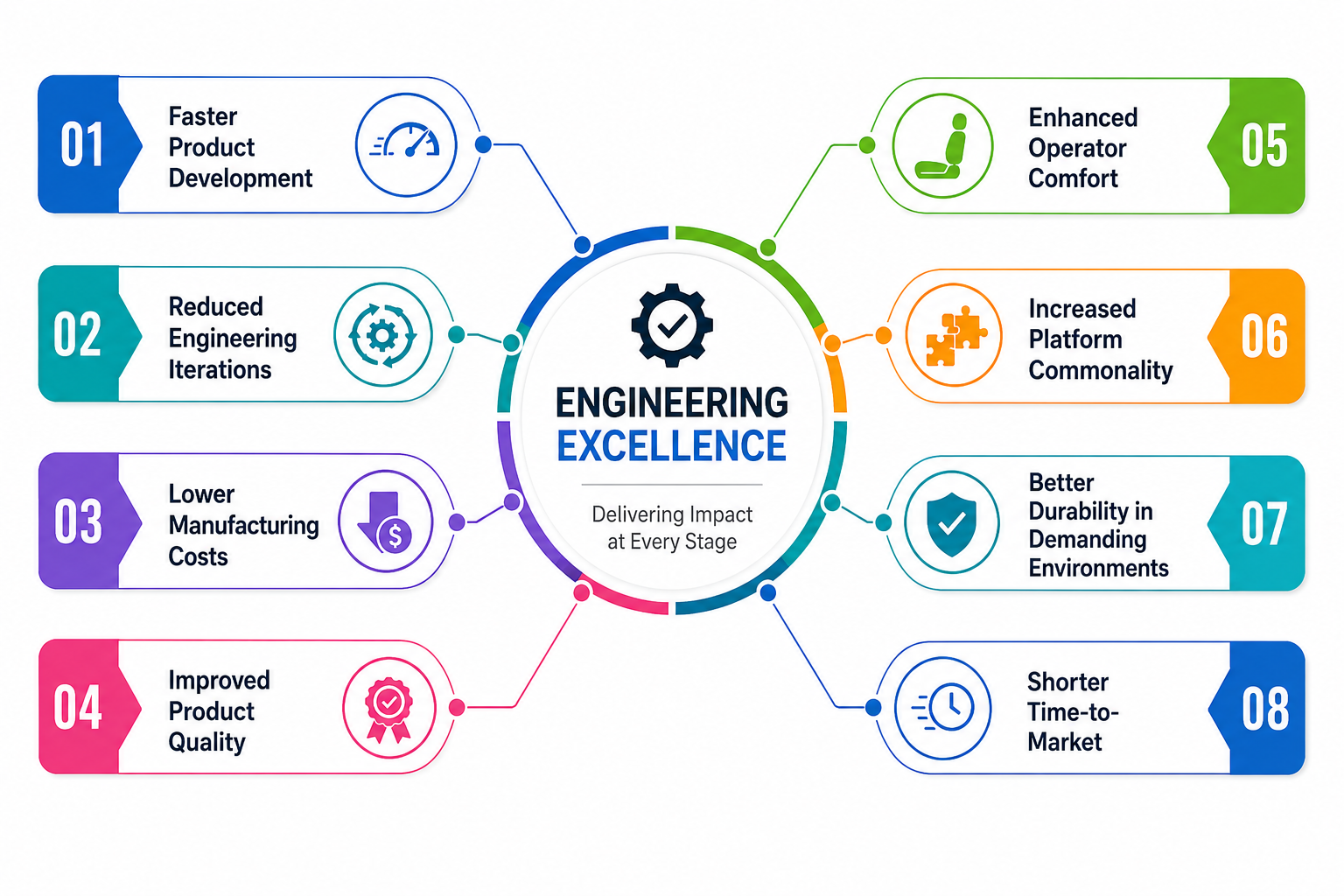
Manufacturers that invest in optimized Off-Road Vehicle Seat Design gain measurable advantages throughout the product lifecycle.
Key business benefits include:
CROSS-FUNCTIONAL DEVELOPMENT
Why Engineering Collaboration Matters
Successful product development requires more than creating a functional seat assembly.
A collaborative engineering approach combines mechanical design, structural analysis, manufacturing expertise, and product optimization to ensure every seating system meets performance, quality, and production objectives.
Engineering partners who understand the unique challenges of Off-Road Vehicle Seat Design can help manufacturers reduce project risks, improve design efficiency, and accelerate innovation without compromising reliability.
CONCLUSION
Build Better Seats—and Better Vehicle Platforms
As off-road vehicles become more advanced, Off-Road Vehicle Seat Design continues to play an increasingly important role in product performance, manufacturing efficiency, and operator satisfaction.
By leveraging multiple design concepts, structural simulation, ergonomic engineering, manufacturing optimization, and component standardization, OEMs can reduce development costs while delivering durable, high-quality seating systems that perform reliably in demanding environments.
For North American manufacturers seeking to improve product development and accelerate innovation, investing in smart engineering practices for Off-Road Vehicle Seat Design is a long-term competitive advantage.
READY TO IMPROVE YOUR NEXT PLATFORM?
Turn your seat concept into a production-ready design.
FREQUENTLY ASKED QUESTIONS
Off-Road Vehicle Seat Design FAQs
What is Off-Road Vehicle Seat Design?+
Off-Road Vehicle Seat Design is the engineering process of developing seating systems that provide durability, comfort, safety, structural strength, and manufacturability for ATVs, UTVs, agricultural equipment, construction vehicles, and other off-road platforms.
Why is FEA important in Off-Road Vehicle Seat Design?+
FEA enables engineers to validate structural performance before physical prototypes are built, reducing development time, improving reliability, and lowering engineering costs.
How can OEMs reduce seat development costs?+
Manufacturers can reduce costs through component standardization, Design for Manufacturing (DFM), early simulation, optimized material selection, and efficient engineering collaboration.
Which industries benefit from Off-Road Vehicle Seat Design?+
Industries including agriculture, construction, utility vehicles, mining, powersports, industrial equipment, specialty vehicles, and defense benefit from advanced seating system engineering.