When material stops moving efficiently, production feels the impact. Explore common equipment challenges and the engineering decisions that can help manufacturing teams improve flow, access, and reliability.
4 min read | CAD & Mechanical Engineering | Manufacturing
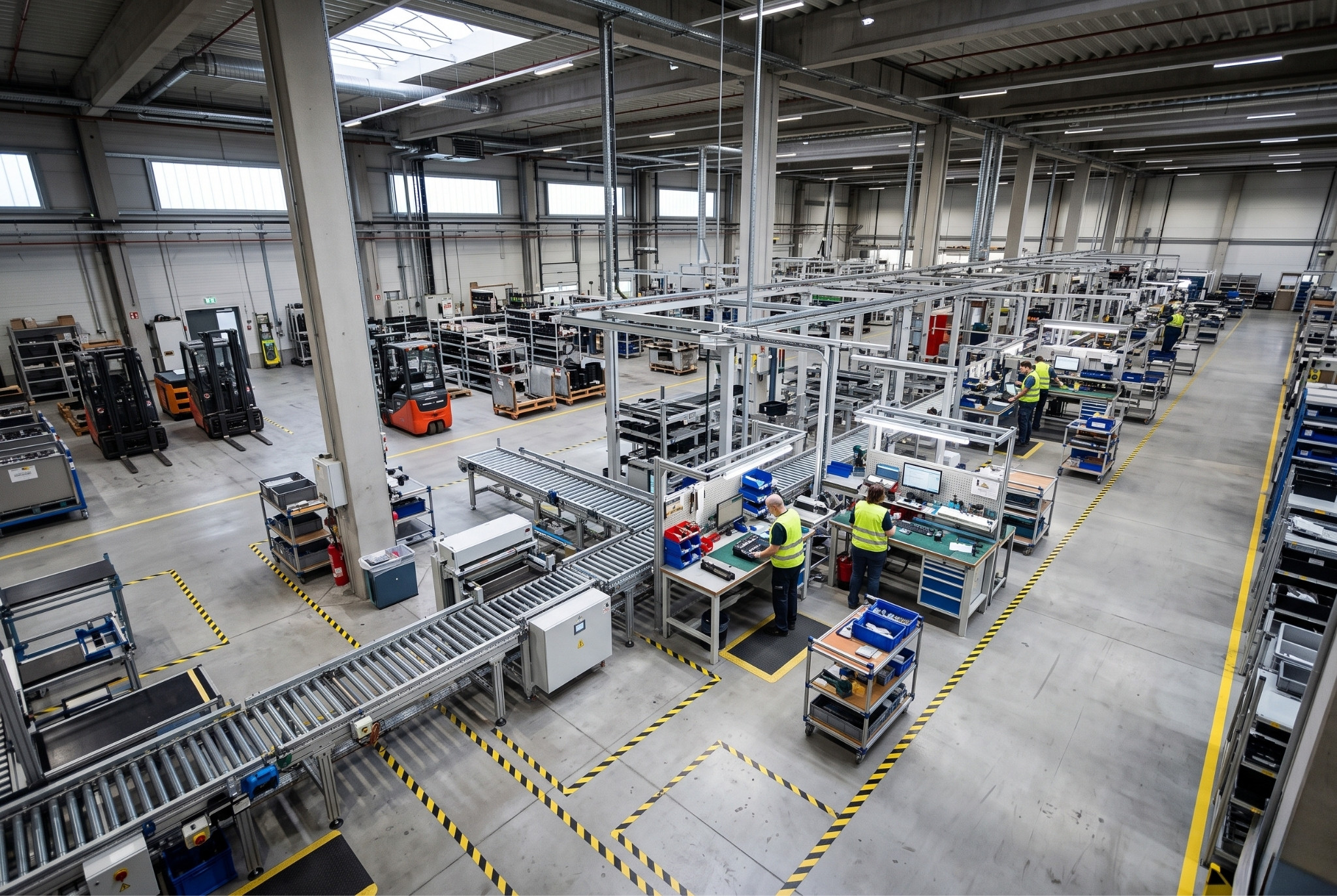
Material handling equipment connects the stages of a manufacturing process. Conveyors, lifts, carts, transfer units, and custom fixtures help move components through
production—but when the equipment is poorly matched to the process, material flow can become a source of delay instead of a support system.
Small design gaps can create larger operational problems: queues build up between workstations, operators make manual adjustments, and maintenance teams struggle to reach wear components. Solving these issues usually starts with understanding the process and designing equipment around the real operating conditions.
Effective material handling design is not just about moving a load. It is about keeping the entire production process moving predictably
Most recurring material-flow problems can be traced to a mismatch between the equipment, the product, and the way the line operates.
01 / FLOW
Conveyor bottlenecks and uneven flow
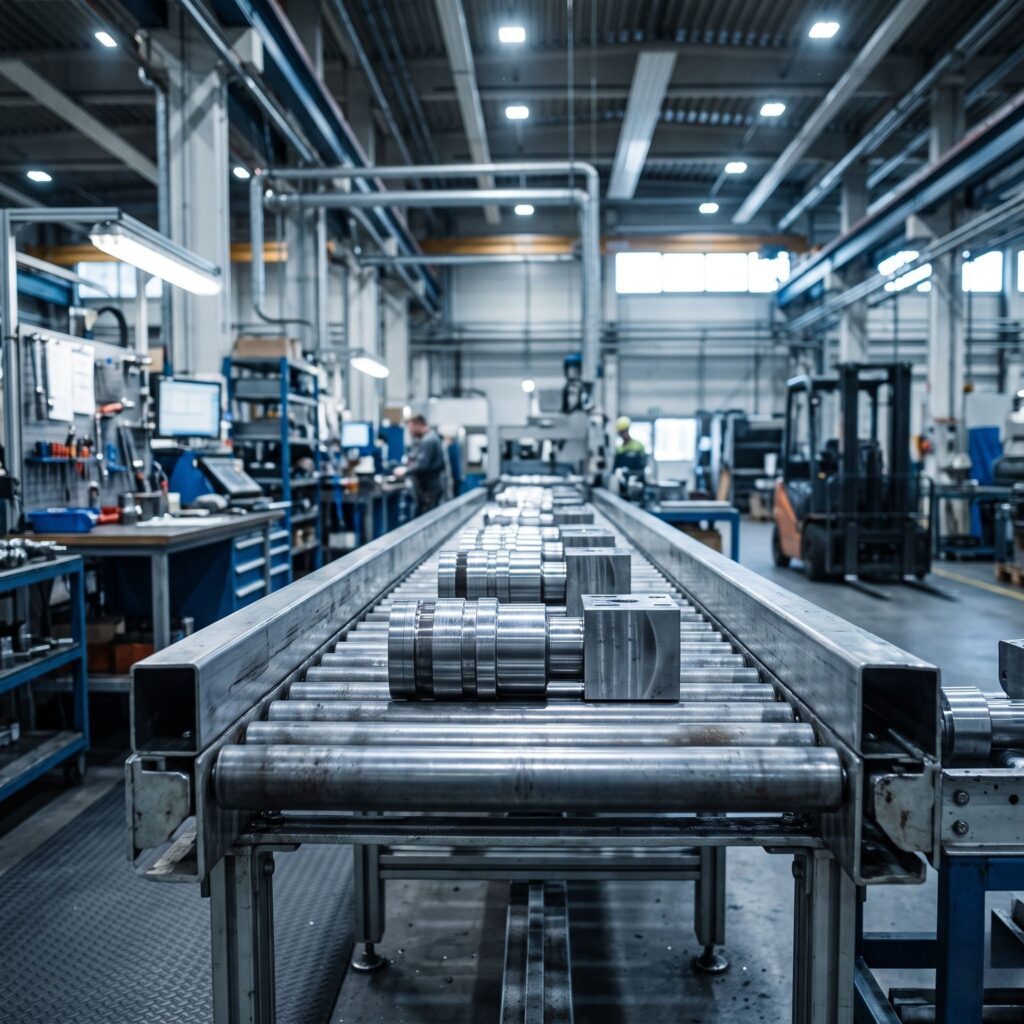
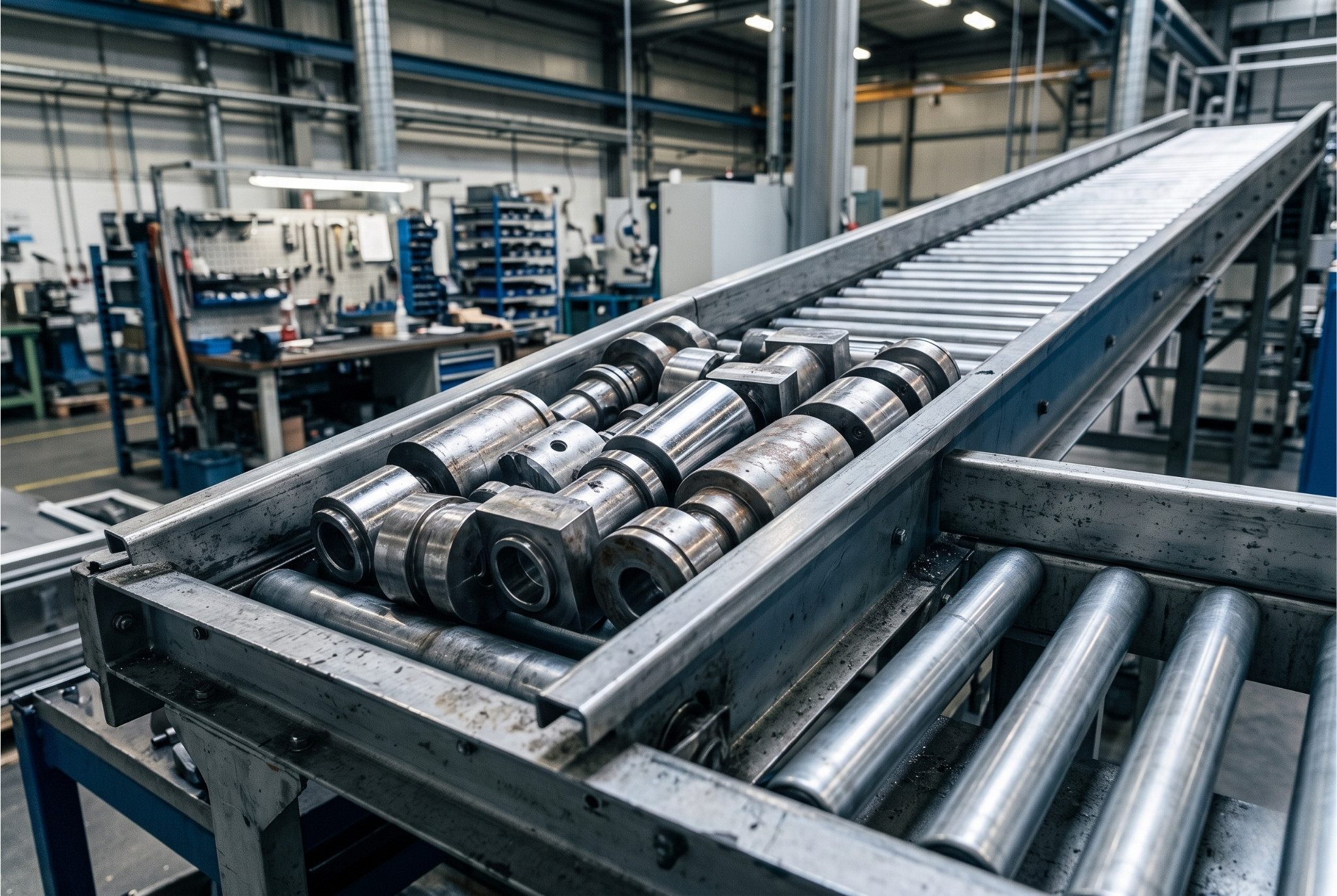
When conveyor speed, accumulation space, or transfer points do not match the production cycle, parts queue up in one area while downstream stations wait. Review peak throughput, spacing, handoff timing, and buffer capacity together—not as isolated settings.
02 / FIT
Equipment that does not fit the real process
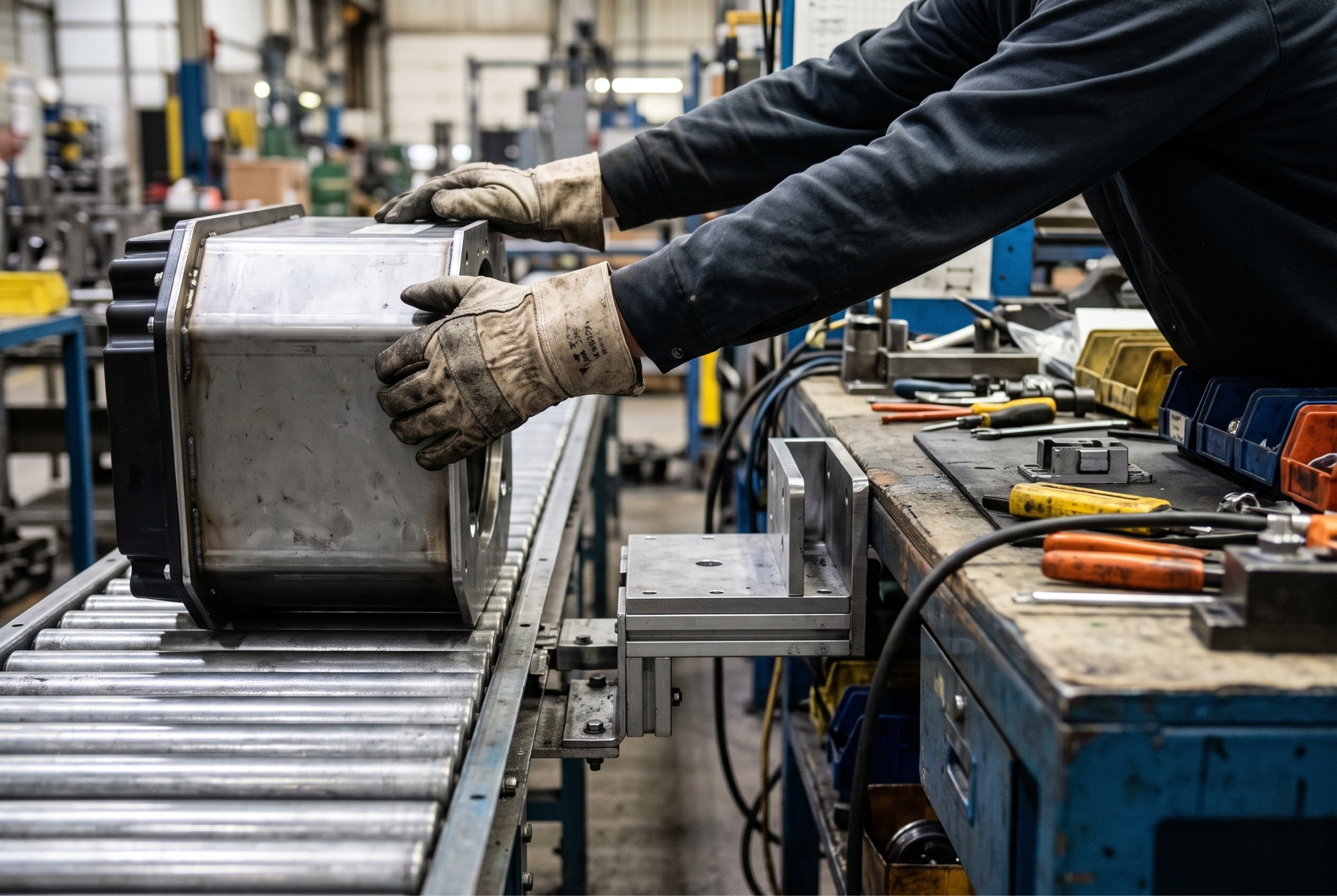
Product dimensions, load variation, orientation, and workstation access can change how a handling system performs. Designing around ideal conditions alone may lead to awkward transfers, manual intervention, or damage to parts.
03 / UPTIME
Maintenance access is an afterthought
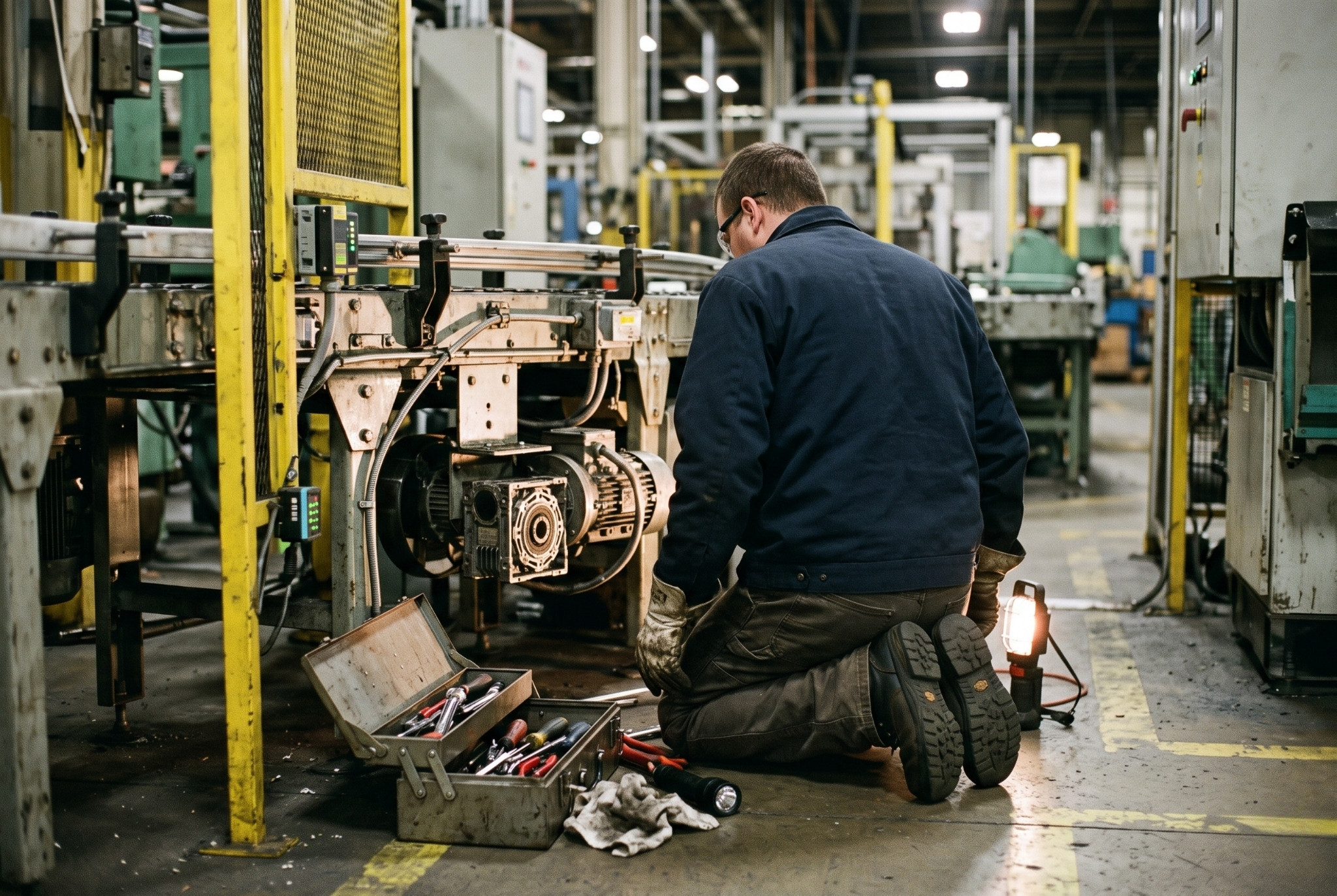
Guards, motors, sensors, bearings, and adjustment points need practical access. If routine service requires removing unrelated components or disrupting adjacent stations, maintenance becomes slower and downtime harder to control.
Design considerations that improve material flow
Before selecting or modifying equipment, engineering teams should align on the operating requirements. These four considerations create a practical starting point for a new design or a retrofit.
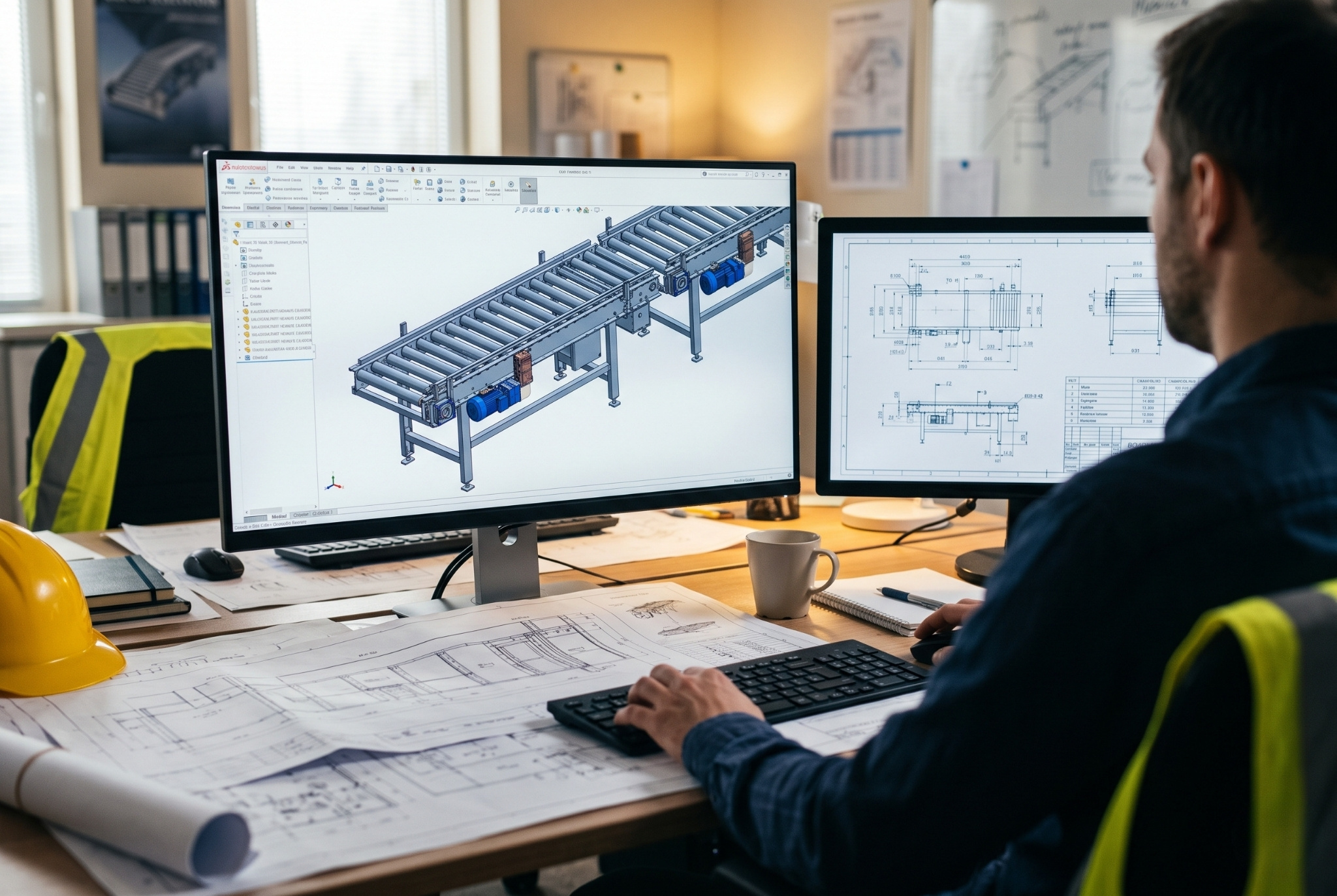
Early design reviews help connect layout, access, and operating requirements before fabrication.
01. Throughput and cycle time
Define required output, peak demand, product mix, and expected variation. Check whether the handling system can support the required cycle without creating queues or starving downstream operations.
02. Load and transfer conditions
Confirm part size, weight, center of gravity, surface sensitivity, orientation, and transfer height. These details affect support design, motion, guarding, and the risk of product damage.
03. Layout and integration
Evaluate floor space, operator movement, existing machinery, utilities, safety zones, and future line changes. A handling unit must work within the wider production environment.
04. Maintenance and changeover
Plan access to wear parts, sensors, motors, and adjustment points. If product variants are expected, account for changeover time and adjustment range during the design stage.
How CAD engineering supports better equipment design
Computer-aided design (CAD) helps teams test the physical arrangement before committing to fabrication. A coordinated 3D model can bring equipment, product geometry, operator space, and nearby machinery into one reviewable environment.
- From concept to review
Find design conflicts earlier
CAD models and assembly checks can help identify interference, insufficient clearances, difficult service access, and integration issues. Detailed drawings also give fabrication and installation teams clearer information to work from.
For custom material handling equipment, the value comes from using CAD as part of a design review process—not simply creating a visual model. Requirements, assumptions, interfaces, and revisions should remain coordinated as the project develops.
Equipment performance depends on more than one conveyor or lift. The most useful design review follows the complete material journey: incoming parts, transfer points, buffers, workstations, inspection, and outgoing product. It also considers how operators interact with the system and how maintenance work can be completed safely.
When engineering, manufacturing, and maintenance teams review these conditions together, they can prioritize changes based on operational impact rather than treating each symptom as a separate problem.
- Quick Answers
Frequently asked questions
Common questions about material handling equipment design in manufacturing environments.
Common problems include conveyor bottlenecks, inconsistent material flow, equipment that does not suit the load or production cycle, limited maintenance access, and integration conflicts with existing machinery.
Map the flow between stations, measure cycle time and peak throughput, review accumulation and transfer points, and check whether equipment capacity matches the actual product mix and production requirements.
CAD supports layout planning, 3D visualization, clearance and interference checks, assembly review, and detailed engineering documentation before equipment is fabricated or installed.
Consider load dimensions and weight, required throughput, transfer conditions, available floor space, operator access, safety requirements, maintenance access, and how the system will integrate with existing equipment.
- Plan with the process in mind
Planning your next material handling equipment project?
From resolving production bottlenecks to developing custom equipment designs, the right engineering approach begins with understanding your operational requirements. Jaydu’s CAD and mechanical engineering capabilities can support equipment design, design modifications, and engineering documentation tailored to project needs.