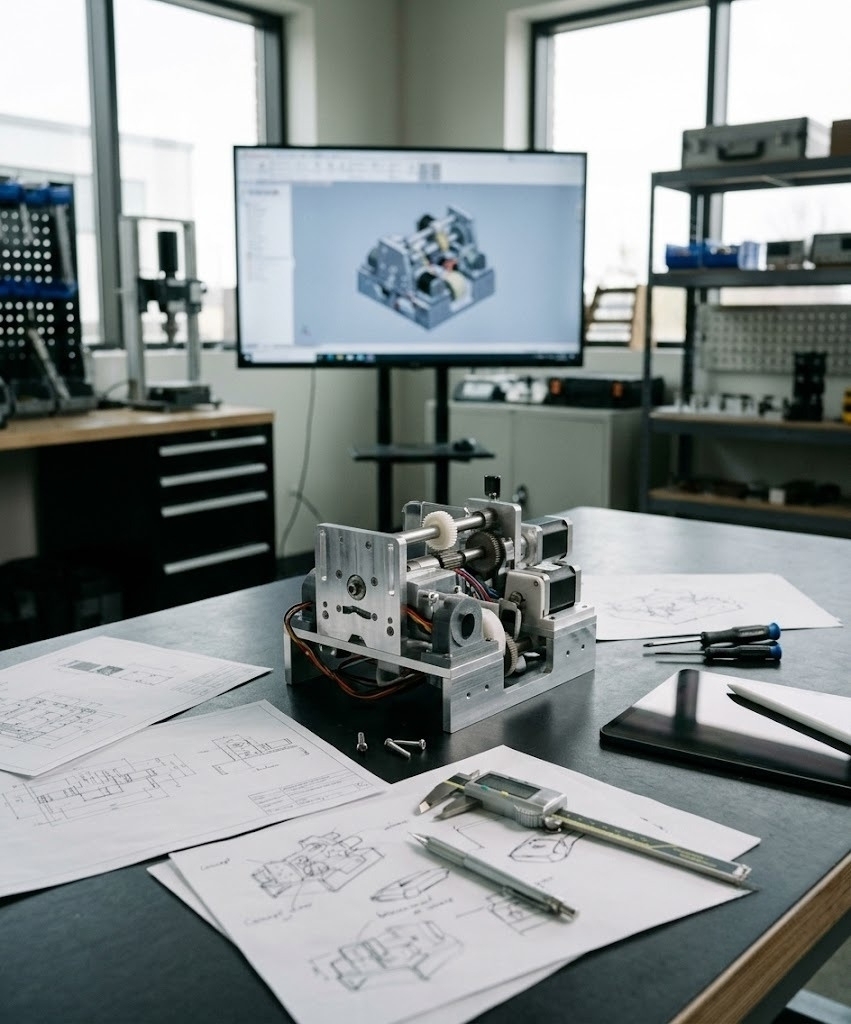
Concept engineering helps teams resolve critical technical uncertainty before it turns into prototype rework, supplier issues, manufacturing interruptions, or field failures. The goal is to make important engineering decisions while options are still practical to evaluate.
01 — DECISION QUALITY
Start With the Engineering Decision, Not the Deliverable
Completing a document does not necessarily mean the engineering question has been resolved. Teams need clarity on architecture feasibility, cost targets, system interfaces, and expected operating conditions before detailed work progresses.
Effective early reviews focus on what must be decided, what evidence supports the decision, and which uncertainties remain open. That keeps deliverables connected to actual engineering outcomes.
“
The objective is decision closure—not document completion.
A principle for early-stage engineering reviews
02 — CONTROL THE BASELINE
Establish a Controlled Baseline Before Detailed Work
A reliable concept review establishes the requirements, revisions, operating conditions, interfaces, deviations, acceptance criteria, and assumptions that guide the next stage. Teams should record what has been verified and what still needs evidence.
01
Requirements
Set performance goals, operating conditions, and acceptance criteria before detailed design begins.
02
Interfaces
Identify dependencies between components, systems, suppliers, and teams.
03
Assumptions
Separate confirmed evidence from constraints that still need testing or validation.
04
Revision control
Keep teams aligned on the same approved engineering baseline.
03 — DOWNSTREAM IMPACT
The Hidden Cost Is Downstream Ambiguity
When early decisions remain unresolved, their effects can surface across supplier coordination, manufacturing, assembly, testing, and later design revisions. Teams may need to revisit work that has already been reviewed, released, or validated.
WHAT TEAMS SHOULD WATCH
- Unconfirmed supplier constraints
- Conflicting engineering revisions
- Late manufacturing requirements
- Assumptions exposed during testing
05 — REUSE WHAT YOU LEARN
Make Engineering Knowledge Reusable
Capture the reasoning behind important decisions alongside constraints, failure modes, and lessons learned. This gives teams a stronger starting point for future product variants and helps prevent the same unresolved questions from recurring across projects.
A practical habit
Keep decision rationale, supporting evidence, unresolved questions, and follow-up ownership together with the concept baseline—so downstream teams understand not only what was chosen, but why.