
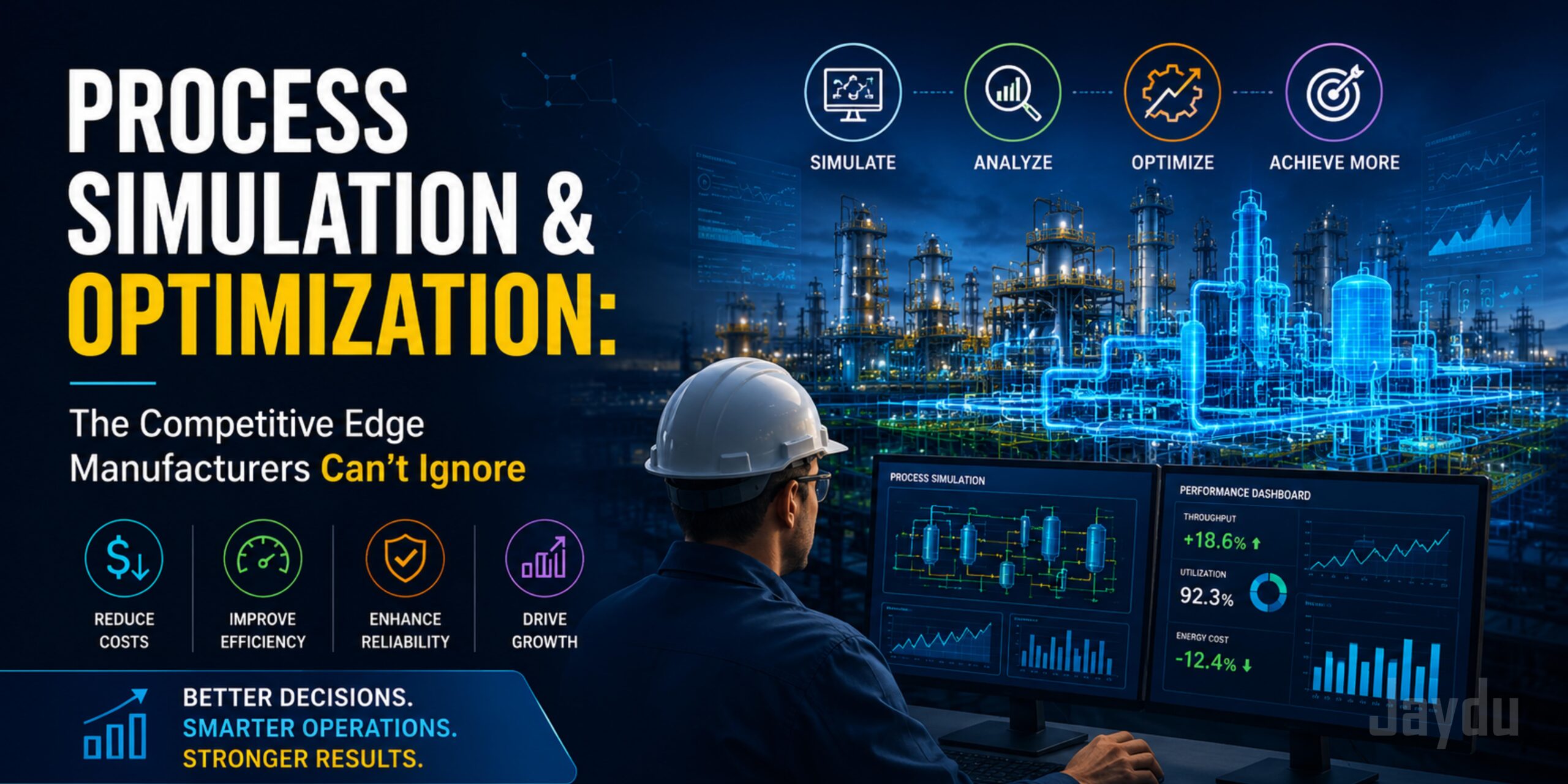
Process Simulation & Optimization: The Competitive Edge Manufacturers Can’t Ignore
Use digital process models to expose hidden capacity, validate changes before implementation, and improve operational performance without disrupting production.
Why Process Simulation Matters Now
Manufacturers today are under relentless pressure — tighter margins, rising energy costs, aging equipment, and increasingly complex production environments. The question isn't whether your facility needs to perform better. It's how fast you can make that happen without shutting down operations to figure out what's broken.
Process simulation and optimization answers that question. And for manufacturers who haven't made it part of their engineering strategy yet, the gap between them and their competitors is quietly widening.
What Process Simulation Actually Means on the Floor
Process simulation is the use of digital models that accurately mirror your real-world equipment, systems, and production workflows. Combined with the right optimization methodology, these models don't just show you what's happening — they reveal what should be happening, and give your engineering teams the data to close that gap.
For a manufacturing operation, that could mean modeling your entire production line to identify cycle time bottlenecks, simulating energy flows across your facility, or validating a new layout before a single piece of equipment moves.
The old way: Engineers spending weeks gathering data, building static spreadsheets, and presenting findings that were outdated before they were acted on. The new approach is digital, structured, and tied to real operational data — decisions get made faster, changes get implemented with confidence.
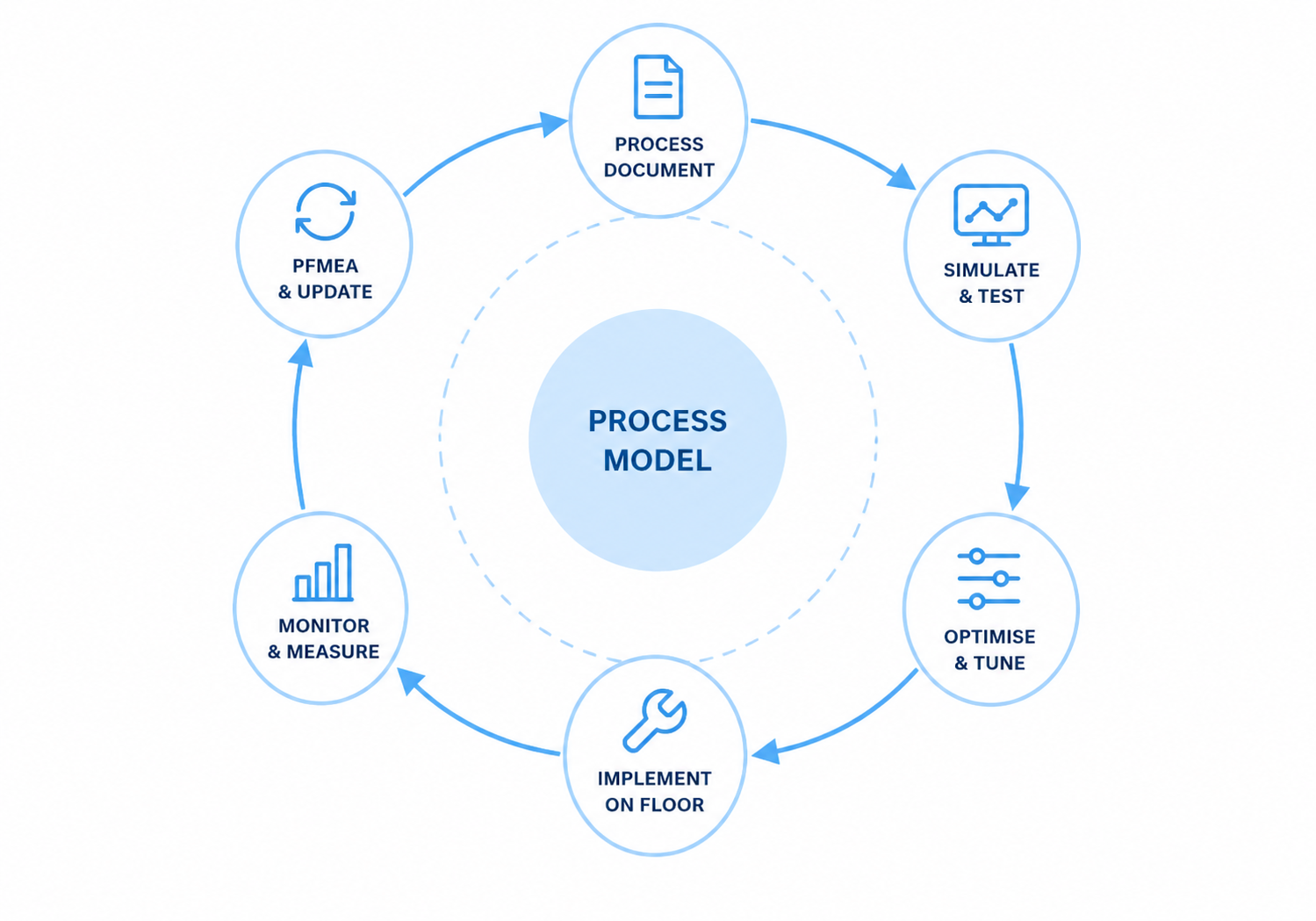
The Continuous Improvement Loop
Where Manufacturers Lose Ground Without It
Most facilities are running below potential and not because of bad equipment. The losses are process-based, and they accumulate quietly.
Throughput Left on the Table
A single misconfigured process stage throttles output by double digits. Without modeling, it stays invisible for months.
Model-Driven Bottleneck Identification
Jaydu builds process models of your line and runs structured analysis to locate exactly where and why output is constrained.
Energy Waste Invisible to Reporting
Equipment running “fine” by standard metrics is consuming 20–30% more energy than necessary and is never tuned to current conditions.
Simulation-Validated Energy Analysis
Process simulation exposes energy inefficiencies at equipment level, giving engineers specific changes rather than broad recommendations.
Unplanned Downtime Feels Sudden
Without structured process monitoring, failure events appear from nowhere. The root cause was drifting for weeks.
PFMEA & Process Documentation Discipline
Jaydu builds and maintains current PFMEAs so your teams understand failure modes before they become incidents.
How Jaydu's Engineers Approach It
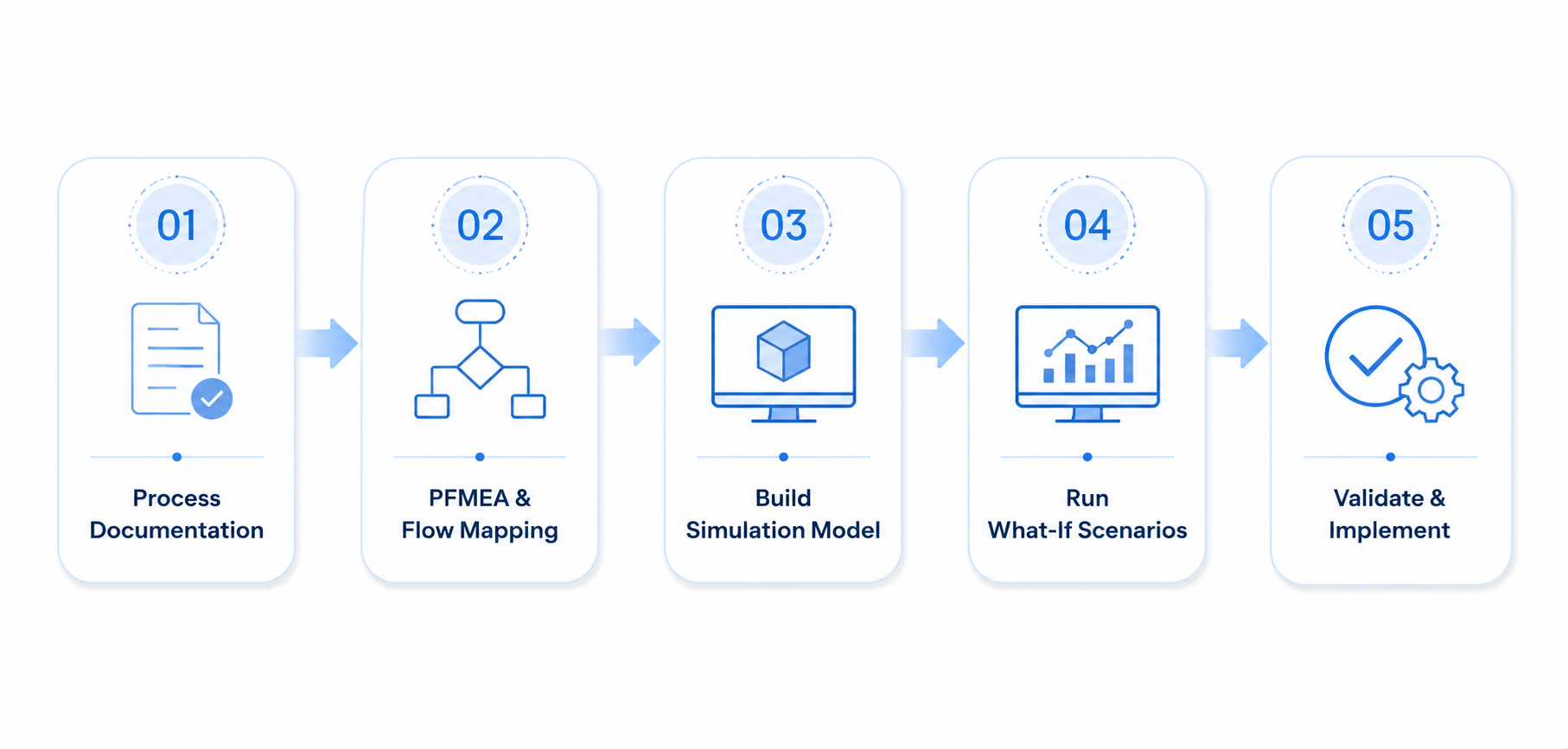
Simulation without engineering discipline is just software. A process model is only as good as the data behind it — if process flows are inaccurate, equipment parameters are undocumented, or the model doesn't reflect how the line actually runs, the outputs won't be trustworthy.
Jaydu always starts on the floor. Every engagement is grounded in real process data before any model is built.
The Measurable Impact on Your Operation
When process simulation is applied with real engineering rigour, the results are specific and measurable — not theoretical projections.
Where Jaydu Applies This Across Services
Process simulation and optimization runs through every Jaydu engineering engagement and it's not a standalone offering, it's how we work.
Process Engineering
Manufacturing process design, PFMEA, process flow development, and cycle time reduction.
Digital Manufacturing
Simulation-driven factory design, virtual commissioning, and Industry 4.0 implementation.
Lean & Continuous Improvement
Kaizen, OEE programs, and value stream mapping validated through process simulation before rollout.
Plant Engineering
Facility layout and capacity planning with multiple scenarios tested before anything physically changes.
The manufacturers winning in today's market aren't running on instinct. They're running on engineered insight — and process simulation is how they get it. If your facility is carrying inefficiencies you can't fully see yet, that's where Jaydu starts.
Ready to Optimize Your Processes?
Talk to a Jaydu engineer — no sales pitch, just a conversation about your operation.